

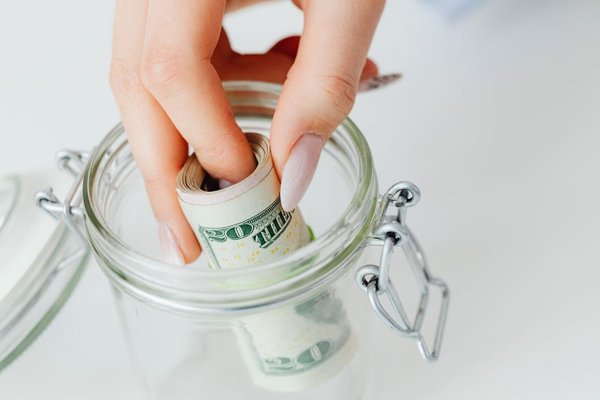
When your income changes from month to month, building an emergency fund can feel like trying to hit a moving target. A salaried worker can often automate the same transfer every payday. A freelancer, contractor, commission-based worker, or small business owner may have a strong month followed by a quiet one. The solution is not to abandon emergency savings. It is to build a system that flexes with your cash flow while still protecting you from genuine financial shocks.
Why irregular income needs a different emergency-fund plan
An emergency fund for irregular income has to do two jobs. First, it should protect you from unexpected costs such as an urgent car repair, medical bill, or essential home repair. Second, it should help prevent normal income fluctuations from turning into emergencies. That means your plan needs both a cash buffer for lean periods and a longer-term reserve for larger disruptions.
Even a small amount of dedicated emergency savings can improve financial resilience. Financial experts often recommend working toward several months of living expenses, with six months commonly used as a strong benchmark. For someone with inconsistent income, though, the right target also depends on how volatile earnings are, how predictable essential expenses are, and how quickly new work can usually be found.
Start with your bare-minimum monthly number
Do not base your target on your best month or your usual lifestyle spending. Calculate the minimum needed to keep your household functioning for one month. Include housing, utilities, basic groceries, insurance, transport, minimum debt payments, medication, and other essential commitments. Leave out expenses you could pause during a difficult period.
Suppose your normal monthly spending is $3,200 but essentials total $2,200. Using $2,200 as the foundation gives you a more realistic target. Three months of essentials would be $6,600, while six months would be $13,200. Build toward those milestones gradually rather than treating the largest number as an immediate requirement.
Build two layers instead of one giant fund
Create an income-smoothing buffer first
Your first layer can be a small operating buffer for ordinary low-income months. Aim initially for enough to cover the gap between a typical lean month and your essential expenses. If you usually earn at least $1,700 in slower months and need $2,200 for essentials, a $500 to $1,000 buffer can stop a temporary shortfall from becoming credit-card debt.
Then build the true emergency reserve
Once the short-term buffer is in place, direct additional variable income savings toward a larger reserve. This money is for genuinely unexpected or disruptive events, such as a major repair, a health expense, or a prolonged loss of work. Separating the two purposes helps you distinguish a normal lean month from an actual emergency.
Save a percentage when income arrives
A fixed monthly savings target can be frustrating when earnings fluctuate. A percentage-based rule often works better. You might divide each payment as soon as it arrives, with set shares going toward taxes, essential bills, spending, and your emergency fund. The exact percentage should fit your circumstances; consistency matters more than choosing a perfect number.
For example, a freelancer might send 8% of every client payment to a freelancer emergency fund until the next milestone is reached. On a $500 payment, that is $40. On a $3,000 payment, it is $240. The contribution rises in stronger months and falls when income is lighter.
Use strong months to prepare for weak ones
Irregular earners can get into trouble when a high-income month permanently raises spending. A steadier approach is to build your baseline lifestyle around a conservative income level and give surplus income specific jobs. After covering taxes and near-term bills, move part of the surplus to your cash buffer and emergency savings before increasing discretionary spending.
This is especially useful after large projects, seasonal peaks, bonuses, tax refunds, or several invoices arriving at once. One strong month can sometimes add more to your reserve than several average months combined.
Keep emergency savings separate and accessible
Emergency money should be easy to access, protected from everyday spending, and kept somewhere appropriate for cash savings rather than exposed to major market swings. A dedicated savings account can create useful distance from your checking account while keeping funds available when needed.
Give the account a clear name such as “Emergency Reserve.” Natural related topics for further reading include emergency fund basics, budgeting with variable income, and how much emergency savings to keep.
Decide in advance what counts as an emergency
With inconsistent income, the line between a slow month and an emergency can become blurry. Set rules before you need the money. A delayed invoice may justify using the income-smoothing buffer, while a sudden medical expense may qualify for the larger reserve. A planned annual insurance bill should ideally come from a separate sinking fund because it is predictable.
When you use emergency savings, make rebuilding the next goal. Temporarily increase the share you save from future payments until the fund returns to its previous level.
Review your target as your income changes
Recalculate essential expenses when rent changes, debt is paid off, family responsibilities shift, or your work becomes more or less predictable. Someone with several steady retainer clients may need a different cushion from someone who depends on occasional large projects.
A quarterly review is often enough. Look at your lowest earning months, how long clients typically take to pay, and the size of recent unexpected expenses. Those figures produce a more useful target than copying a generic rule.
Frequently asked questions
How much should I save for an emergency fund with irregular income?
Start with a small buffer, then work toward several months of essential expenses. Three to six months is a common planning range, but highly unpredictable earners may prefer a larger cushion if it is realistic for their budget.
Should freelancers use emergency savings during slow months?
Ideally, normal slow months should be covered by an income-smoothing buffer or planned cash reserve. Use the larger emergency fund for more serious, unexpected disruptions whenever possible.
Is it better to save a fixed amount or a percentage?
For irregular income, a percentage of each payment is often easier to sustain because contributions automatically adjust to what you earn. You can still set minimum goals when cash flow allows.
Where should I keep an emergency fund?
Choose a safe, accessible place separate from everyday spending. Many people use a dedicated bank or credit-union savings account so the money stays liquid without sitting in the account used for routine purchases.
Build flexibility into the plan
The goal is not to make unpredictable income behave like a fixed salary. It is to create enough structure that a weak month, late payment, or unexpected bill does not immediately push you toward debt. Start with your essential monthly number, build a cash buffer, save a percentage of incoming payments, and use stronger months to accelerate progress. Over time, that flexible system can turn irregular earnings into a much more stable financial life.